Does Matcha Have More Caffeine Than Coffee?
This post may contain affiliate links. Please read our disclosure policy.
Does matcha have more caffeine than coffee? Usually, no. A regular cup of brewed coffee generally has more caffeine than a standard serving of matcha, but the answer changes when you compare strong matcha, matcha lattes, espresso, and café-sized drinks.
If you want zero caffeine with all the visual drama, butterfly pea flower tea is the caffeine-free blue tea I reach for after noon.
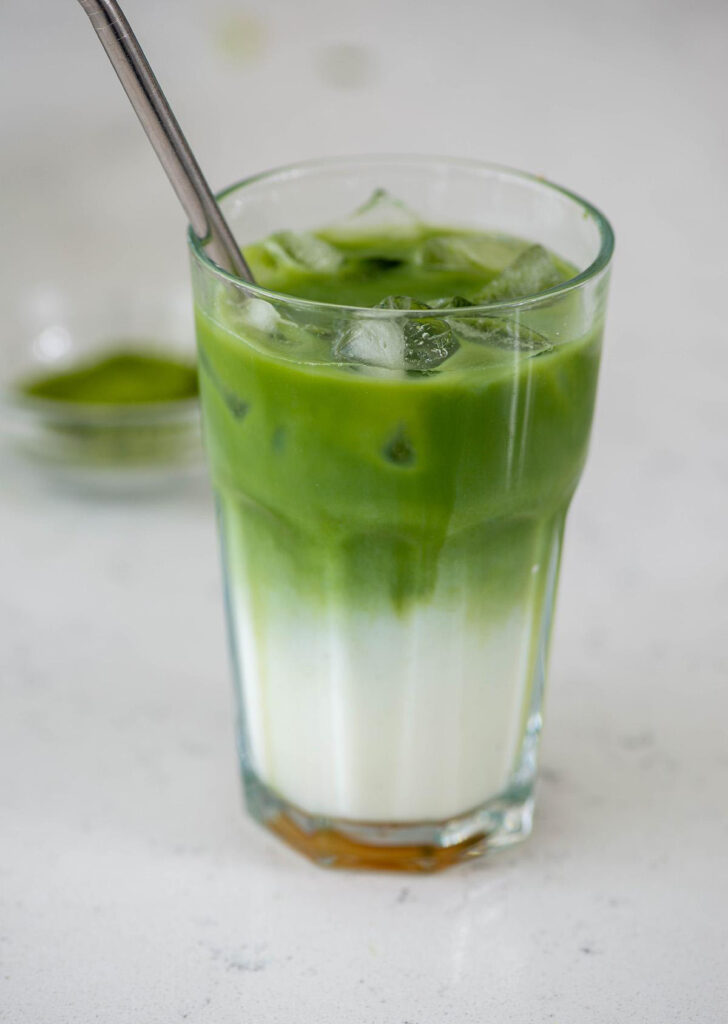
As a nutritionist, I like to answer this question by looking at serving size first. Matcha and coffee are both caffeinated drinks, but people often compare them unfairly. One person may be drinking one teaspoon of matcha in milk, while another may be drinking a large cold brew or two espresso shots. That is where the confusion begins.
So let’s clear this confusion of Does matcha have more caffeine than coffee in simple way.
If you are new to matcha, I have a full matcha tea for beginners guide that explains what matcha is, how it tastes, and how to start using it.
Quick Answer: Does Matcha Have More Caffeine Than Coffee?
In most everyday servings, matcha has less caffeine than coffee. A standard matcha drink made with about 1 to 2 grams of matcha powder usually has less caffeine than an 8-ounce cup of brewed coffee. But a strong matcha drink made with more powder can come close to coffee or even overlap with it.
Here is the simple way I explain it:
Matcha is usually moderate caffeine. Coffee is usually higher caffeine. Espresso is small but concentrated. Café drinks can be all over the place depending on size and recipe.
That is why the real answer is not just “matcha” or “coffee.” The real answer is: how much matcha powder or coffee are you actually drinking?
it depends on how you measure it. Per gram, matcha is actually more caffeine-dense than coffee. But per cup, a typical serving of matcha usually has less caffeine than a standard cup of drip coffee.
The short answer is: gram for gram, matcha is more caffeine dense. The key difference is how the caffeine feels matcha contains L-theanine, which creates a slower, steadier energy release compared to coffee.
Does Matcha Have More Caffeine Than Coffee?
The answer depends on how you look at it, and most articles online pick one angle and run with it, which is why there is so much conflicting information.
Gram for gram: Matcha contains more caffeine. One gram of matcha powder has roughly 19-44 mg of caffeine. One gram of ground coffee has about 10-12 mg.
Cup for cup: Coffee usually wins. A typical matcha serving uses only 1-2 grams of powder, giving you 38-88 mg of caffeine per cup. A standard 8-ounce drip coffee uses 7-10 grams of ground coffee, delivering 95-200 mg of caffeine.
So if someone tells you matcha has more caffeine than coffee, they are talking about concentration by weight. If they say coffee has more, they are talking about what you actually drink in one sitting. Both are correct — just measuring different things.
Matcha Caffeine vs Coffee: The Numbers
Here is a clean comparison across the most common formats you will come across in the US.
| Drink | Serving Size | Caffeine (approx.) |
|---|---|---|
| Drip coffee | 8 oz | 95-200 mg |
| Espresso (single shot) | 1 oz | 63-75 mg |
| Cold brew | 8 oz | 100-200 mg |
| Matcha tea (traditional) | 1 tsp powder / 8 oz | 38-88 mg |
| Matcha latte (homemade) | 1 tsp powder / 12 oz | 38-88 mg |
| Matcha latte (Starbucks grande) | 16 oz | ~80 mg |
| Culinary grade matcha | 1 tsp / 8 oz | 30-70 mg |
| Ceremonial grade matcha | 1 tsp / 8 oz | 50-88 mg |
A few things worth knowing about these numbers:
- Ceremonial grade matcha is shade-grown for longer, which increases both caffeine and L-theanine content. This is the grade traditionally used for drinking (not baking or cooking).
- Culinary grade matcha, widely available at Trader Joe’s and Whole Foods, has slightly less caffeine and a stronger, more bitter flavor. It is better suited for smoothies and lattes.
- The Starbucks matcha latte uses a sweetened matcha blend, so the caffeine number can vary slightly by location and drink size.
Why People Think Matcha Has More Caffeine Than Coffee
I often see people get confused because matcha can feel different from coffee.
Coffee usually gives a quicker, more noticeable caffeine hit. Some people feel it almost immediately, especially if they drink it on an empty stomach. Matcha can feel smoother for many people because it contains caffeine along with L-theanine, an amino acid naturally found in green tea. This is why some people describe matcha as giving a calmer or steadier kind of alertness.
But a smoother feeling does not always mean more caffeine. That is the important difference. Matcha may feel more balanced, while coffee may feel stronger. But in most regular servings, brewed coffee still has more caffeine than matcha.
Why Matcha Caffeine Feels Different From Coffee
This is the part that most caffeine comparisons miss, and it is the real reason people switch from coffee to matcha.
Matcha contains an amino acid called L-theanine. Coffee contains none.
L-theanine does two important things:
1. It slows caffeine absorption. Coffee delivers its caffeine hit within 15-30 minutes. Matcha takes 30-45 minutes to peak. The energy comes on gradually rather than all at once.
2. It extends how long the energy lasts. Coffee energy typically peaks and drops within 2-3 hours, often followed by a crash. Matcha energy tends to hold steady for 4-6 hours.
The result is what matcha drinkers often describe as “calm focus.” You feel alert and clear-headed, but not wired. No racing heart. No mid-morning jitters. No sharp afternoon drop.
This also explains why matcha is popular among people who do focused desk work like writing, studying, creative projects where sustained, steady attention matters more than a quick spike.
Beyond L-theanine, matcha is also rich in EGCG, a well-researched antioxidant that is not found in coffee. Because you consume the entire ground leaf rather than an infusion, you get more of these compounds in every cup than you would from steeped green tea.
Matcha vs Coffee: Which Is Better for Your Energy?
Neither is universally better. They serve different energy needs.
Choose matcha if:
- Coffee gives you jitters, anxiety, or heart palpitations
- You crash hard in the early afternoon
- You have a sensitive stomach (matcha is gentler on the gut than coffee)
- You want sustained focus for 4-6 hours without interruption
- You are cutting back on caffeine overall
Stick with coffee if:
- You need a fast, powerful energy hit first thing in the morning
- You exercise early and want a pre-workout boost
- You simply love the taste and it works well for your body
Both work fine if:
- You want to have matcha in the morning and coffee before a workout, or vice versa
- You space them at least 3-4 hours apart and stay mindful of your total daily caffeine intake
- The FDA recommends no more than 400 mg of caffeine per day for healthy adults
Matcha vs Coffee: Which One Should You Choose?
As a nutritionist, I would choose based on your body, your routine, and your caffeine tolerance.
The healthiest choice is not automatically matcha or coffee. The better choice is the one you can enjoy without overdoing caffeine, sugar, or large café portions.

How to Buy Matcha in the US
Matcha quality varies a lot. Here is where to find good options at US grocery stores and online.
At Whole Foods
Ippodo, Jade Leaf, and Matcha Love are reliably stocked and solid quality for everyday drinking.
At Trader Joe’s
Their culinary grade matcha powder is a great affordable option for smoothies, lattes, and baking. It is not ceremonial grade but it is widely loved for its value.
At Patel Brothers
You will find matcha powder at a lower price point, often imported from Japan or China. Check that it is 100% pure matcha with no added sugar or fillers.
On Amazon
Ippodo, Jade Leaf, and Encha are among the most consistently reviewed ceremonial grade options. Look for Japanese origin (Uji or Nishio regions are the most established) and a bright green color. Dull or yellowish matcha is a sign of lower quality or age.
Quick buying tip: For drinking (lattes, whisked tea): ceremonial grade. For smoothies, energy balls, oatmeal, baking: culinary grade works perfectly and costs less.
Easy Ways to Add Matcha to Your Daily Routine
If you are new to matcha or want to use it beyond a simple cup of tea, here are a few ideas that work well.
- Morning matcha latte: Whisk 1 teaspoon of ceremonial grade matcha with 2 tablespoons of hot (not boiling) water until frothy. Add your choice of warm milk, oat, almond, or whole milk all work well. Sweeten with a little maple syrup or honey if you like.
- Matcha overnight oats: Stir half a teaspoon of culinary grade matcha into your overnight oats mix. It adds a subtle earthy flavor and a gentle caffeine boost to your breakfast.
- Matcha smoothie: Blend half a teaspoon of matcha into a banana, spinach, and almond milk smoothie. The matcha pairs naturally with the green base.
- Matcha energy balls: Mix matcha powder into a base of oats, nut butter, and dates for a grab-and-go snack with a natural energy lift.
Frequently Asked Questions
Does matcha have more caffeine than coffee per gram?
Yes. Per gram, matcha contains roughly 19-44 mg of caffeine compared to around 10-12 mg per gram of ground coffee. However, because a typical matcha serving uses far less powder than a cup of coffee uses grounds, the total caffeine per cup is usually lower in matcha.
How much caffeine is in a matcha latte?
A homemade matcha latte made with 1 teaspoon (about 2 grams) of matcha powder contains approximately 38-88 mg of caffeine depending on the grade. A Starbucks grande matcha latte contains around 80 mg.
Is matcha better than coffee for anxiety?
Matcha tends to be easier on the nervous system than coffee for people prone to anxiety. The L-theanine in matcha helps slow caffeine absorption and promotes a calmer state of alertness. Coffee contains no L-theanine, which is why some people experience jitters or heightened anxiety after drinking it. Individual responses to caffeine vary.
Can I drink matcha instead of coffee every day?
Yes, for most healthy adults this is fine. Matcha provides a moderate daily caffeine intake that falls well within the FDA-recommended limit of 400 mg per day for healthy adults, even at 2-3 cups per day. The key is factoring in all other caffeine sources throughout the day.
Does matcha give you jitters like coffee?
Less commonly, yes. The L-theanine in matcha attenuates the jitter response by extending caffeine absorption over a longer window. Most people find matcha produces a steadier, calmer energy than coffee, though very high amounts can still cause overstimulation in caffeine-sensitive individuals.
Is matcha safe during pregnancy compared to coffee?
Both matcha and coffee contain caffeine, which should be limited during pregnancy. Most health guidelines suggest keeping total daily caffeine under 200 mg during pregnancy. A single serving of matcha (about 38-88 mg) leaves more room in that budget than a standard cup of coffee (95-200 mg), which is one reason some pregnant women prefer it. Always check with your healthcare provider about what is right for your situation.
How long does matcha caffeine last vs coffee?
Coffee energy typically peaks within 30 minutes and fades after 2-3 hours. Matcha energy comes on more gradually and tends to last 4-6 hours, thanks to the slowing effect of L-theanine on caffeine absorption.
Does matcha have more caffeine than green tea?
Yes, significantly. A cup of regular steeped green tea contains about 20-30 mg of caffeine. Matcha contains 38-88 mg per cup because you consume the entire ground leaf rather than just an infusion.
Can I drink matcha and coffee on the same day?
Yes. Many people drink matcha in the morning for calm focus and coffee before a workout or in the afternoon. Space them at least 3-4 hours apart and keep your total daily caffeine intake under 400 mg.
What is the caffeine in a Starbucks matcha latte?
A Starbucks grande matcha latte (16 oz) contains approximately 80 mg of caffeine. Note that Starbucks uses a sweetened matcha blend, so the drink also contains added sugar. A homemade matcha latte using pure matcha powder lets you control exactly what goes in.
What to Make with Matcha
For a make-ahead breakfast, try this matcha chia pudding recipe, mango matcha chia pudding, or strawberry matcha chia pudding.
Matcha Recipes If You Want to Try
- Matcha Recipes
- Iced Matcha Latte Recipe
- Iced Strawberry Matcha Latte Recipe
If You like this recipe and made it Please rate the recipe. It helps us to reach more people. For the Latest updates Subscribe to Rekha’s Whatsapp. You can follow me on Instagram, Facebook, Youtube, Pinterest for more food inspirations.
Hot Matcha Latte Recipe | How to Make a Perfect Cup

Ingredients
- 1 tsp Matcha powder
- 3/4 cup Almond Milk or oat milk or regular milk
- ¼ cup hot water
- 1 tsp maple syrup
- Vanilla extract optional
Instructions
Step 1: Sift the Matcha
- Sift 1 teaspoon of matcha into a mug or bowl to remove lumps. This ensures a smooth, clump-free latte.
Step 2: Add Hot Water
- Heat water to 175°F (or let boiled water sit for a minute). Add 2 ounces (¼ cup) to the sifted matcha to create a concentrate.
Step 3: Whisk Until Frothy
- Whisk vigorously in a zig-zag motion until fully dissolved and frothy. No whisk? Use a milk frother, shake in a jar, or stir hard with a spoon. Aim for a smooth, lump-free matcha shot.
Step 4: Sweeten (Optional)
- Add sweetener like honey or sugar to the warm concentrate and stir to dissolve. Doing this before the milk helps it blend better.
Step 5: Heat & Froth Milk
- Heat milk to about 150°F (steaming, not boiling). Froth using a frother, whisk by hand, or shake in a sealed jar. Foam is optional but adds a nice touch.
Step 6: Combine
- Pour the hot milk into the matcha concentrate. Stir gently to mix. Spoon foam on top if available. Sweeten now if you didn’t earlier.
Step 7: Enjoy
- Your matcha latte is ready! Optionally dust with matcha on top or try simple latte art. Sip and enjoy the calm energy.