Dementia Prevention Spice Blend Recipe
This post may contain affiliate links. Please read our disclosure policy.
Dementia prevention spice blend recipe videos have been trending all year, but most of them hide the actual recipe behind an email opt-in. In this post I am sharing the full four-spice blend openly, the research behind each ingredient, and one swap I make as a certified nutritionist to get far better absorption from the same spices.
Disclaimer: A note on this post’s claims
This recipe is built on widely studied, food first spices. I am a certified nutritionist, not a doctor, and food is food, not medicine. Nothing on this page treats, prevents, or cures dementia, Alzheimer’s, or any disease. Talk to your physician before adding any spice blend to your routine, especially if you take blood thinners, diabetes medications, or are pregnant.
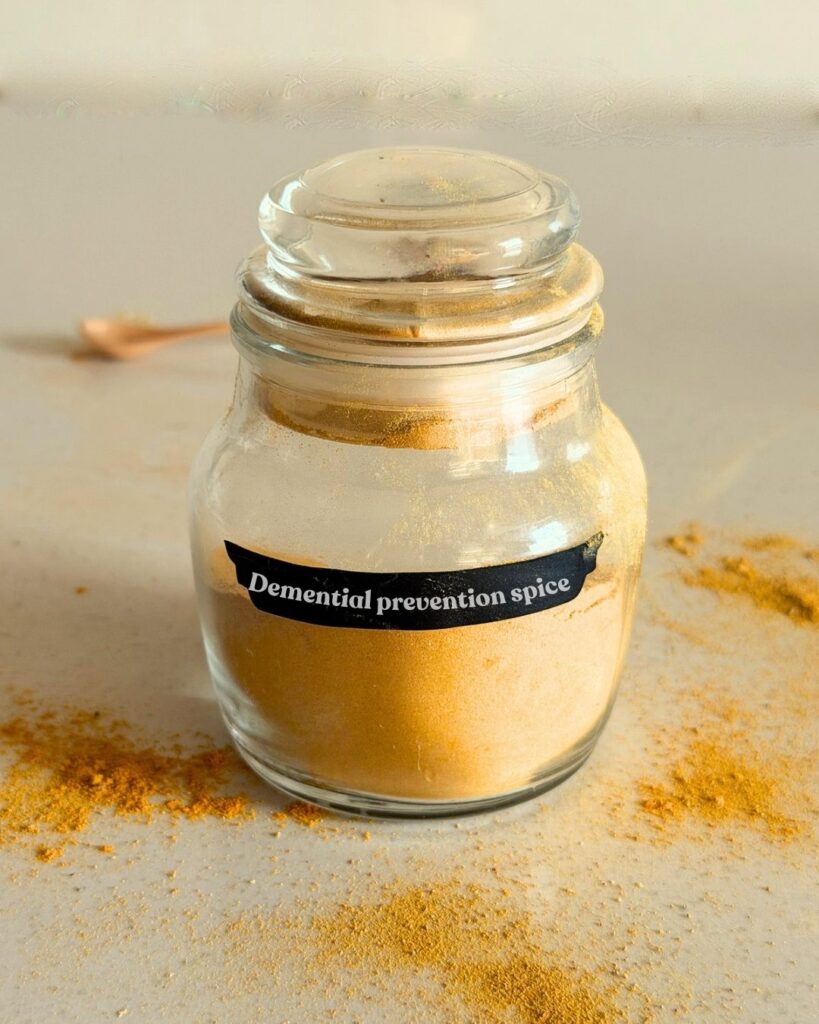
The dementia prevention spice blend recipe is a four spice mix of turmeric, cinnamon, ginger, and black pepper or cayenne, taken in small daily doses. The blend draws on research showing curcumin, cinnamaldehyde, gingerol, and piperine may help support brain health by reducing inflammation, improving blood flow to the brain, and protecting neurons from oxidative stress.
Why You Will Love This Brain Health Spice Blend
- Takes 3 minutes to make, lasts about 6 weeks in your spice cabinet
- Uses only four pantry spices, all easy to find in any US or Canadian grocery store
- Backed by peer-reviewed research, not just social media hype
- One small swap (black pepper) boosts turmeric absorption significantly
- Versatile: stir into yogurt, oatmeal, smoothies, soups, curries, or warm milk
- Naturally vegan, gluten-free, dairy-free, sugar-free
Why This Dementia Prevention Spice Blend Recipe Works
Together, these five form a synergistic blend that the MIND diet research framework calls a sensible everyday brain support strategy.
- Turmeric delivers curcumin, the most studied compound in this category for neuroinflammation and brain health.
- Black pepper contains piperine, which has been shown to increase curcumin absorption by up to 2,000 percent. Skipping it means most of the turmeric goes to waste.
- Ceylon cinnamon is studied for blood sugar regulation, and steady blood sugar is one of the strongest dietary levers for long term brain health.
- Ginger is a gentle anti inflammatory with a long research history.
- Cayenne supports healthy circulation through capsaicin, including blood flow to the brain.
Ingredients for Dementia Prevention Spice Blend Recipe
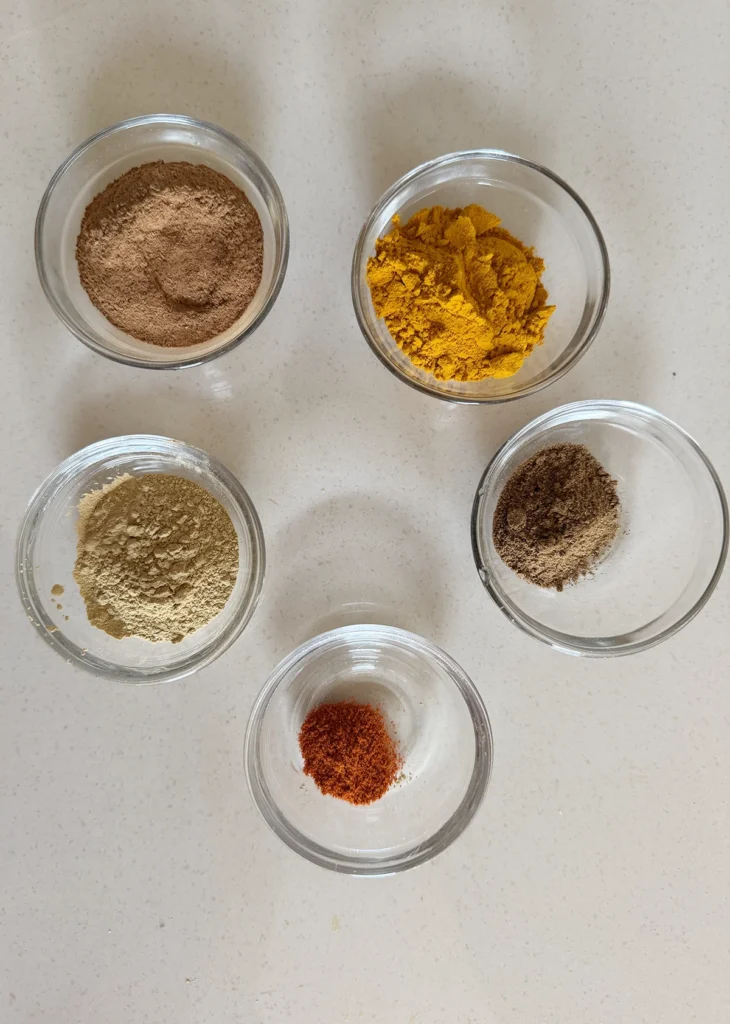
Ingredients for the Dementia Prevention Spice Blend
Makes about 1/3 cup of dry blend, roughly 30 servings of 1/2 teaspoon each.
- 3 tablespoons ground turmeric (Simply Organic, Frontier Co-op, or 24 Mantra are reliable brands)
- 2 tablespoons ground Ceylon cinnamon (not cassia)
- 2 tablespoons ground ginger
- 1 teaspoon ground black pepper, freshly ground if possible
- 1/2 teaspoon ground cayenne pepper (optional but recommended for circulation support)
Optional honey paste version (the viral form):
Ingredient Guide for US Kitchens
- Turmeric: Whole Foods, Trader Joe’s, Sprouts, and most large grocery stores carry it. For best quality and price, Patel Brothers or any Indian grocery sells it in larger pouches. Simply Organic and Frontier Co-op are easy online finds on Amazon.
- Ceylon cinnamon: This is the key one. Most “cinnamon” sold in US supermarkets is cassia, which contains higher levels of coumarin (a compound your liver does not love in big daily doses). Ceylon cinnamon is the safer choice for daily consumption. Look for it at Whole Foods, on Amazon (Frontier Co-op, Simply Organic, and 365 Whole Foods all carry it), or any health food store. The label will say “Ceylon.”
- Ginger: Standard supermarket ground ginger works. Costco often has a great price.
- Black pepper: Use freshly ground if you have a peppermill, otherwise any good quality ground black pepper.
- Cayenne: Trader Joe’s, Whole Foods, and any grocery spice aisle. Start with less if you are sensitive to heat.
- Raw honey: Whole Foods, Trader Joe’s, and most natural grocers carry small batch raw honey. Local farmers markets are even better. Manuka is a premium option but not required.
Stocking an Indian-American pantry
How to Make the Dementia Prevention Spice Blend
- Measure each spice into a small bowl. Use leveled measuring spoons for accuracy.
- Whisk together with a small whisk or fork until the color is uniform with no streaks of turmeric or cinnamon visible.
- Transfer to a clean, dry glass spice jar with a tight lid. Label it with the date.
- Store away from heat and direct sunlight. A pantry shelf or a closed kitchen cabinet works.
That is the whole recipe. Three minutes, one bowl, no cooking.
Nutritionist’s Note
As a certified nutritionist, here is how I think about this blend honestly. The four spices in this recipe each have real research behind them, but the research is mostly preclinical or in small human trials. No spice blend “prevents” or “reverses” dementia in the way the viral marketing suggests. What this blend can do is add anti-inflammatory and antioxidant compounds to your daily diet, support steadier blood sugar, and pair beautifully with the foods that do have stronger brain-health evidence, leafy greens, berries, fatty fish, nuts, and olive oil (the MIND diet). Think of this blend as one consistent habit inside a bigger pattern, not a standalone fix.
How to Use the Blend Every Day
You only need about 1 teaspoon per day. Here are easy ways to work it into food you already eat.
- Warm spiced milk (golden milk style): 1 teaspoon blend, 1 cup warm milk of choice, 1 teaspoon honey or maple syrup, simmer 2 minutes.
- Morning oatmeal or yogurt: Stir 1/2 teaspoon into your bowl with a drizzle of maple syrup.
- Smoothies: Add 1/2 to 1 teaspoon to a banana, almond butter, and milk smoothie.
- Lentil soup, dal, or vegetable curry: Stir 1 teaspoon in during the last 5 minutes of cooking.
- Roasted vegetables: Toss 1/2 teaspoon with olive oil over cauliflower, sweet potatoes, or carrots before roasting.
- Spiced honey paste: Mix 2 teaspoons of the blend with 2 tablespoons of honey, store in a jar, take 1 teaspoon a day.
Tips for the Best Brain Spice Blend
- Buy spices in small quantities. Ground spices lose potency after about 6 months. Smaller batches stay fresher.
- Always pair turmeric with fat or warm liquid. Curcumin is fat soluble. A blend taken with water alone absorbs poorly.
- Use Ceylon cinnamon for daily use. Cassia is fine occasionally, but for everyday consumption Ceylon is the safer choice.
- Don’t boil honey. If you are adding honey to hot liquid, let the liquid cool to warm first. Boiling honey degrades its enzymes and antioxidants.
- Stir before each use. In the honey paste version, spices settle. A quick stir keeps every spoonful even.
Common Mistakes to Avoid While making Dementia Prevention Spice Blend
- Skipping black pepper. This is the single biggest mistake in viral versions. Without piperine, you absorb a fraction of the curcumin. Always include it.
- Using cassia cinnamon daily. Save cassia for baking. Ceylon is the everyday choice.
- Storing in the fridge. The honey paste does not need refrigeration and crystallizes faster when cold. Keep it in a cool pantry instead.
- Expecting overnight results. Spices work slowly and as part of a bigger pattern. Consistency over months is what matters.
- Taking too much cayenne. A pinch is plenty. Large daily amounts can irritate the stomach and may interact with blood pressure or blood thinning medications.
Variations
- Vegan version: Use pure maple syrup instead of honey. Grade A dark is ideal for the deeper flavor.
- No heat version: Skip the cayenne entirely. The other four spices still deliver the core benefits.
- Saffron upgrade: Add a pinch of saffron threads to a single serving (not the master jar). Saffron has its own brain support research, particularly for mood and mild cognitive decline.
- Low FODMAP friendly: Skip the cayenne and use a smaller amount of ginger.
- Diabetic friendly version: Skip the honey paste version and use only the dry blend, stirred into unsweetened plant milk or oatmeal.
Meal Prep and Storage
Dry blend:
- Pantry: 6 months in a sealed glass jar, away from heat and sunlight.
- Refrigerator: Not needed, and not recommended (introduces moisture).
- Freezer: Not necessary for ground spices.
Honey paste version:
- Pantry: Up to 3 months in a clean, dry, sealed jar at room temperature.
- If the honey crystallizes, place the jar in a bowl of warm (not hot) water for a few minutes.
- Always use a dry, clean spoon when scooping to prevent spoilage.
Make ahead notes: This is the ideal make ahead pantry staple. Double the dry blend and keep a smaller jar by the stove for cooking, plus a separate honey jar for tea and yogurt.
What to Serve It With
- A warm cup of easy golden milk recipe
- A bowl of Creamy Dal
- Roasted vegetable bowls with brown rice and a yogurt drizzle
- A simple turmeric scrambled egg breakfast
Important Safety Notes (read before starting)
Talk to your doctor first if any of the following apply.
- You take blood thinners (warfarin, aspirin, heparin) or anticoagulants. Turmeric and ginger both have mild blood-thinning effects.
- You take medication for blood pressure or blood sugar. These spices can amplify the effect.
- You have gallstones or active gallbladder disease. Turmeric can stimulate bile flow.
- You are pregnant or breastfeeding. Large amounts of these spices are not recommended.
- You are scheduled for surgery in the next 2 weeks. Stop the blend per your surgeon’s instructions.
- You have iron-deficiency anemia. High daily turmeric can reduce iron absorption.
What spices help prevent dementia?
The most studied spices for brain support are turmeric (for curcumin), Ceylon cinnamon, black pepper (for piperine), ginger, rosemary, sage, and saffron. None of them prevent dementia in isolation, but research suggests they may support cognitive health when consumed regularly as part of a brain healthy eating pattern.
Why do you add black pepper to turmeric?
Black pepper contains piperine, which has been shown to increase curcumin absorption by as much as 2,000 percent. Without black pepper, most of the turmeric you eat passes through your body unused. This is non negotiable for any turmeric based blend.
Is Ceylon cinnamon really better than regular cinnamon?
For daily use, yes. Cassia cinnamon, the common supermarket type, contains higher levels of coumarin, which in large daily amounts can be hard on the liver. Ceylon cinnamon has far lower coumarin levels and is the safer choice when you are using cinnamon every day.
How much of this spice blend should I take daily?
Start with 1/2 teaspoon of the dry blend per day, mixed into food or a warm drink. You can work up to 1 to 2 teaspoons total across your meals. There is no need to take it all at once.
Can I take this if I’m on blood thinners?
Turmeric, ginger, and cinnamon can all interact with blood thinning medications. If you take any blood thinner, talk to your physician before using this blend regularly. The same goes for diabetes medications, since cinnamon and turmeric can affect blood sugar.
What does the research actually say about turmeric and Alzheimer’s?
Curcumin has shown promise in animal studies and small human trials for reducing brain inflammation and beta amyloid plaque accumulation, the hallmark of Alzheimer’s. The strongest research uses higher dose bioavailable curcumin supplements, not dietary turmeric. Cooking with turmeric is a sensible long term habit, but it is not a treatment.
Is this the same as golden milk?
No, but they overlap. Golden milk is a warm drink made with turmeric, cinnamon, ginger, black pepper, and milk. This blend is the dry spice mix you can stir into golden milk, oatmeal, yogurt, dressings, or savory cooking. Think of this jar as the base and golden milk as one way to use it.
Can I make this without honey?
Absolutely. The dry blend is the most versatile form. Honey is only needed for the paste style you may have seen on TikTok. Skip the honey if you are vegan, diabetic, or prefer to use the blend in savory cooking.
How long does the spice blend last?
The dry blend keeps for up to 6 months in a sealed jar in a cool, dark pantry. The honey paste version keeps for up to 3 months at room temperature in a clean glass jar.
Can children take this spice blend?
In small amounts mixed into food, yes for children over 1 year old (honey itself is not safe for babies under 1). Skip the cayenne for kids. Start with 1/4 teaspoon stirred into oatmeal or yogurt
This blend is a culinary amount of common kitchen spices. Used at 1 teaspoon a day with food, it is generally safe for healthy adults. Concentrated supplement doses are a different category and should be discussed with a healthcare provider.
If You like this recipe and made it Please rate the recipe. It helps us to reach more people. For the Latest updates Subscribe to Rekha’s Whatsapp. You can follow me on Instagram, Facebook, Youtube, Pinterest for more food inspirations.
Dementia Prevention Spice Blend Recipe
Ingredients
- 3 tablespoons ground turmeric
- 2 tablespoons ground ginger
- 2 tablespoons ground Ceylon cinnamon
- 1 teaspoon ground black pepper
- 1/2 teaspoon Ceyene pepper
Instructions
- In a small bowl, combine the turmeric, Ceylon cinnamon, ginger, black pepper, and cayenne.”,
- Whisk with a small spoon or fork until the mixture is completely uniform in color. It should look like a deep golden orange.
- Transfer to a clean, dry glass jar with a tight fitting lid. A 4 ounce mason jar is perfect.
- Label with the date. Store in a cool, dark cupboard for up to 6 months.
Honey Paste Method
- Place 1/2 cup raw honey or maple syrup in a clean glass jar.
- Add 1 tablespoon of the dry blend and the lemon juice if using.
- Stir gently with a wooden or silicone spoon for about a minute until the spices are evenly suspended.
- Cover and let sit at room temperature for a few hours so the flavors mingle. Stir again before first use. Keeps up to 3 months in a sealed pantry jar.
Rekha’s Notes
Top tip 2: Black pepper is non negotiable. Piperine increases curcumin absorption by up to 2,000 percent.
Top tip 3: Use Ceylon cinnamon, not cassia, for daily use. Cassia is higher in coumarin and not ideal for everyday consumption.
Storage summary: Dry blend keeps 6 months in a sealed pantry jar. Honey paste version keeps 3 months at room temperature. Do not refrigerate either version.
Daily use: Start with 1/2 teaspoon per day stirred into golden milk, oatmeal, yogurt, lentils, or roasted vegetables. Work up to 1 to 2 teaspoons across the day.”,
Medical note: Talk to your physician before adding this blend to your routine if you take blood thinners, diabetes medications, or are pregnant. This recipe is food, not medicine, and does not treat or prevent any disease.”