Mango Sago Pudding Recipe

This post may contain affiliate links. Please read our disclosure policy.
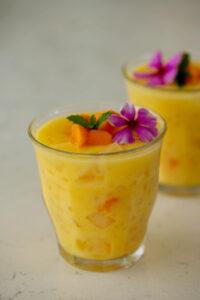
Mango sago pudding is a refreshing chilled dessert made with ripe mango, chewy tapioca pearls, and creamy coconut milk. In this post I am sharing how to make it at home in 30 minutes, plus tips for getting perfectly bouncy pearls every time, a lighter version with less condensed milk, and make ahead no-bake summer dessert instructions for stress-free entertaining.
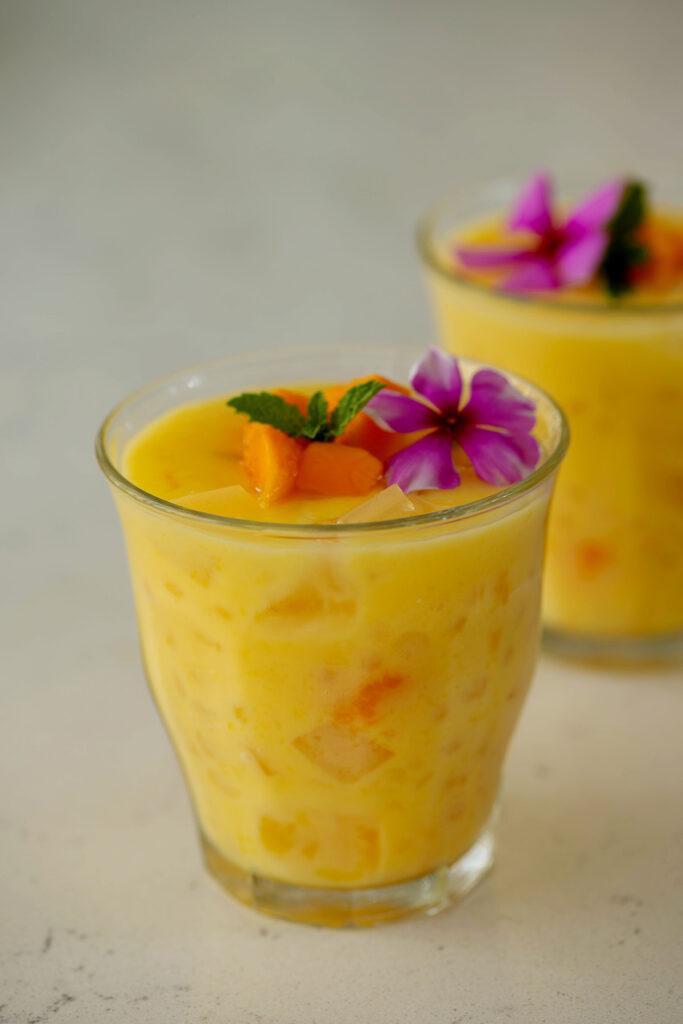
Mango sago pudding is a no-bake, chilled dessert featuring small tapioca pearls in a sweet mango coconut milk base, topped with fresh mango chunks. Cook the tapioca pearls until fully translucent, rinse in cold water, then blend with ripe mango, coconut milk, and a touch of sweetened condensed milk. Chill for 1 to 2 hours and serve cold.
Why I’m obsessed: the little agar agar coconut-jelly cubes add a fresh, bouncy twist no one else on page one is talking about. Plus, monk-fruit lets you cut sugar without losing that tropical vibe.
Why You Will Love This Recipe
- No oven required. This is a stove-to-fridge recipe. You cook one pot of tapioca pearls and blend a creamy mango base. That’s it.
- Ready in 30 minutes (plus chill time). Active prep is under 10 minutes once the pearls are cooked.
- Naturally gluten-free and easy to make dairy-free with simple swaps (see Variations below).
- Make-ahead friendly. The base holds in the fridge for up to 3 days, making it a great prep-ahead option for parties or weeknight dessert.
- Lighter than traditional versions. By balancing the condensed milk with fresh mango sweetness, you get all the tropical flavor without it being cloyingly sweet.
- Kid-friendly and crowd-pleasing. The chewy, almost boba-like tapioca pearls are genuinely fun to eat.
What Is Mango Sago Pudding?
Mango sago pudding originated in Hong Kong in the mid-1980s. It was created at Lei Garden, a well-known Cantonese restaurant, when the head chef developed a chilled coconut milk dessert with tapioca pearls and fresh mango for a Singapore location. Since then, it has spread across Asia and can be found at boba shops and Asian dessert parlors in North American cities.
The dessert has three core components: a sweet mango coconut milk base, small chewy pearls, and fresh mango chunks on top.
A quick note on the name: Most recipes call these “sago pearls” but what you will actually find in US grocery stores are tapioca pearls, which are made from cassava starch. True sago comes from sago palm trees and is less common in North America. The two cook and taste similarly, so tapioca pearls are the right choice here and are easy to find.
Mango Sago Pudding Ingredients
- 1/2 cup small tapioca pearls (the mini ones, about 2mm. Do not use large boba pearls or instant tapioca.)
- 2 large ripe mangoes (about 2 cups of flesh total. Ataulfo, Champagne, Alphonso, or Kent varieties work best.)
- 1 cup full-fat canned coconut milk
- 3 tablespoons sweetened condensed milk (adjust to taste, or use condensed coconut milk for a vegan version)
- 1/4 cup whole milk or oat milk (optional, to thin the base slightly)
- Pinch of salt (sharpens all the flavors)
- Fresh mango chunks for topping
Ingredients Needed
- 2 ripe mangoes (for puree and toppings)-Use Alphonso, Ataulfo or Honey mango for best colour & flavour.
- 1 cup milk or any plant-based milk– I used coconut milk but Coconut, oat or almond milk all work.
- 3 tablespoons sweetened condensed milk– For vegan option use 3 Tbsp thick coconut cream + 1 Tbsp maple syrup.
- ½ cup medium-sized tapioca pearls soaked– Medium pearls give the classic chewy bite. Sago is starch from palm; tapioca pearls come from cassava – they’re interchangeable here
- 2 cups water for cooking sago
- 2 tablespoons agar agar powder– Sets faster than gelatin & stays firm at room temp. It’s a vegetarian and vegan.
- 3 tablespoons water for mixing agar agar
- 150 ml coconut water
- 2 teaspoons monk fruit sweetener – Or any granulated sweetener.
Ingredient Guide for US Kitchens
- Tapioca pearls: Look for small tapioca pearls in the baking aisle of most large grocery stores. Bob’s Red Mill Small Pearl Tapioca is widely available at Whole Foods, Target, and on Amazon. You can also find them at H-Mart, 99 Ranch Market, or Patel Brothers in the international foods aisle. Do not buy large boba pearls (those are different) or instant tapioca (used for pie filling).
- Mango: In summer, Ataulfo (also called Champagne) mangoes are the top pick. They are small, yellow, and almost fiberless with a very creamy texture. Marisol and Kent mangoes work well too. Find Ataulfo mangoes at Costco (they sell them in multi-packs seasonally), Trader Joe’s, and most supermarkets from May through August. Out of season, use frozen mango chunks (thawed completely) or canned Alphonso mango pulp, which is available at Indian grocery stores and on Amazon.
- Coconut milk: Full-fat canned coconut milk gives the best creamy texture. Aroy-D and Chaokoh are reliable brands available at Asian grocery stores. Thai Kitchen is widely available at most US supermarkets and works well.
- Condensed coconut milk: For a vegan or dairy-free version, Nature’s Charm makes a sweetened condensed coconut milk that works as a 1:1 swap. Find it on Amazon or at Whole Foods.
How To Make Mango Sago Pudding ?
Preparing Sago
- Soak sago pearls for 1-2 hours.
Preparing coconut jelly
- First, mix agar agar powder with a little water and mix well until it turns to a paste.
- Now, take coconut water in a saucepan, if you are using fresh coconut water like me, then you can strain it through a sieve to remove any coconut chunks.
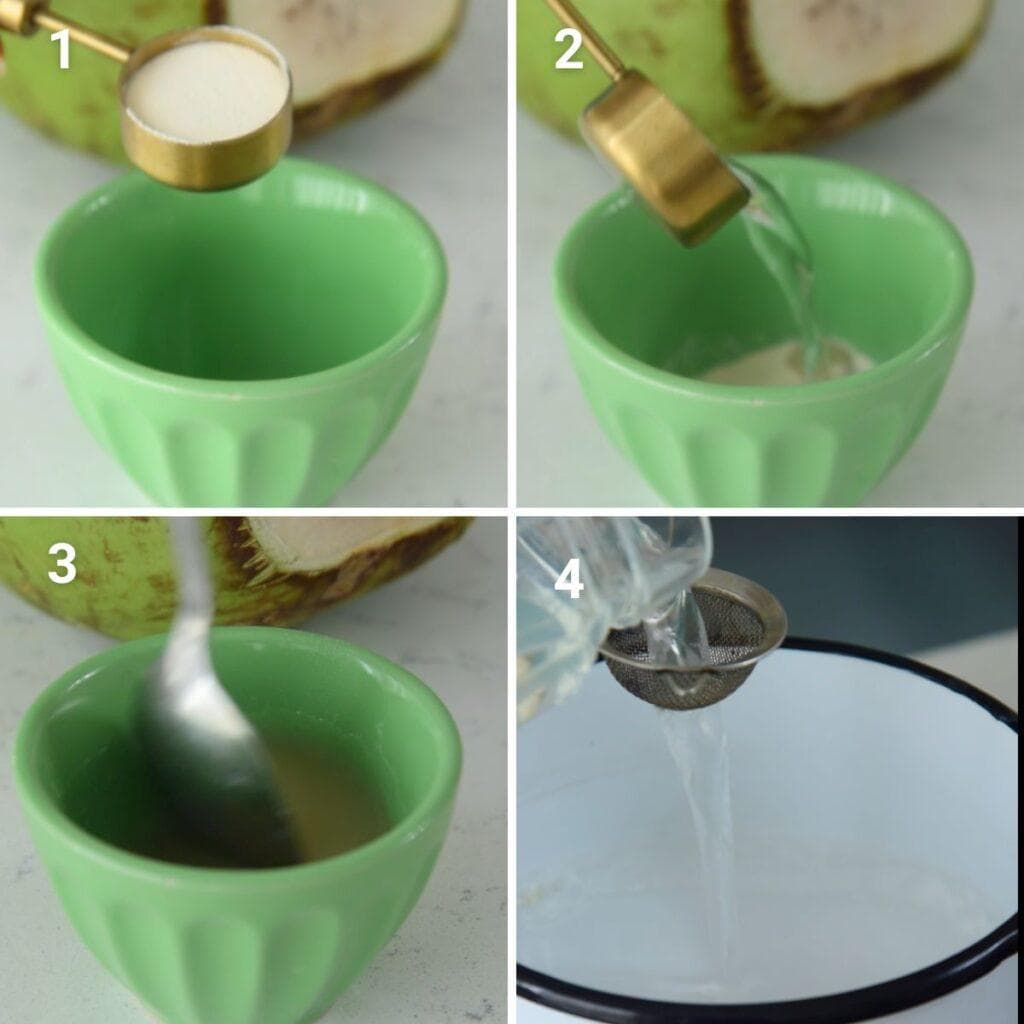
- During this time, add a sweetener to the coconut water for a jelly like flavor, or skip if you want. Then add the agar agar mixture into it & stir until it dissolves completely.
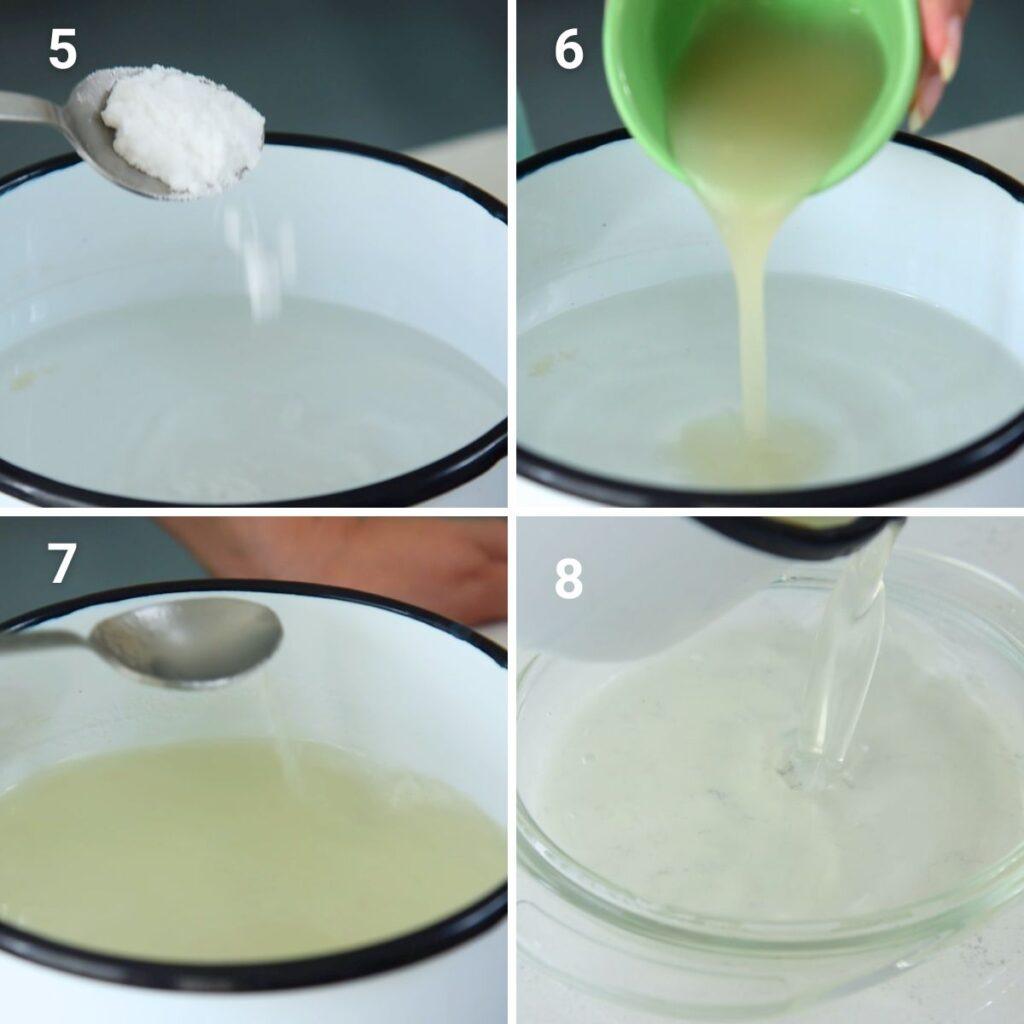
- Keep stirring the coconut water as it simmers and starts to boil.
- After brief boiling, take it off the heat & transfer it into a shallow bowl and let it set in the fridge for an hour.
Cooking The Sago
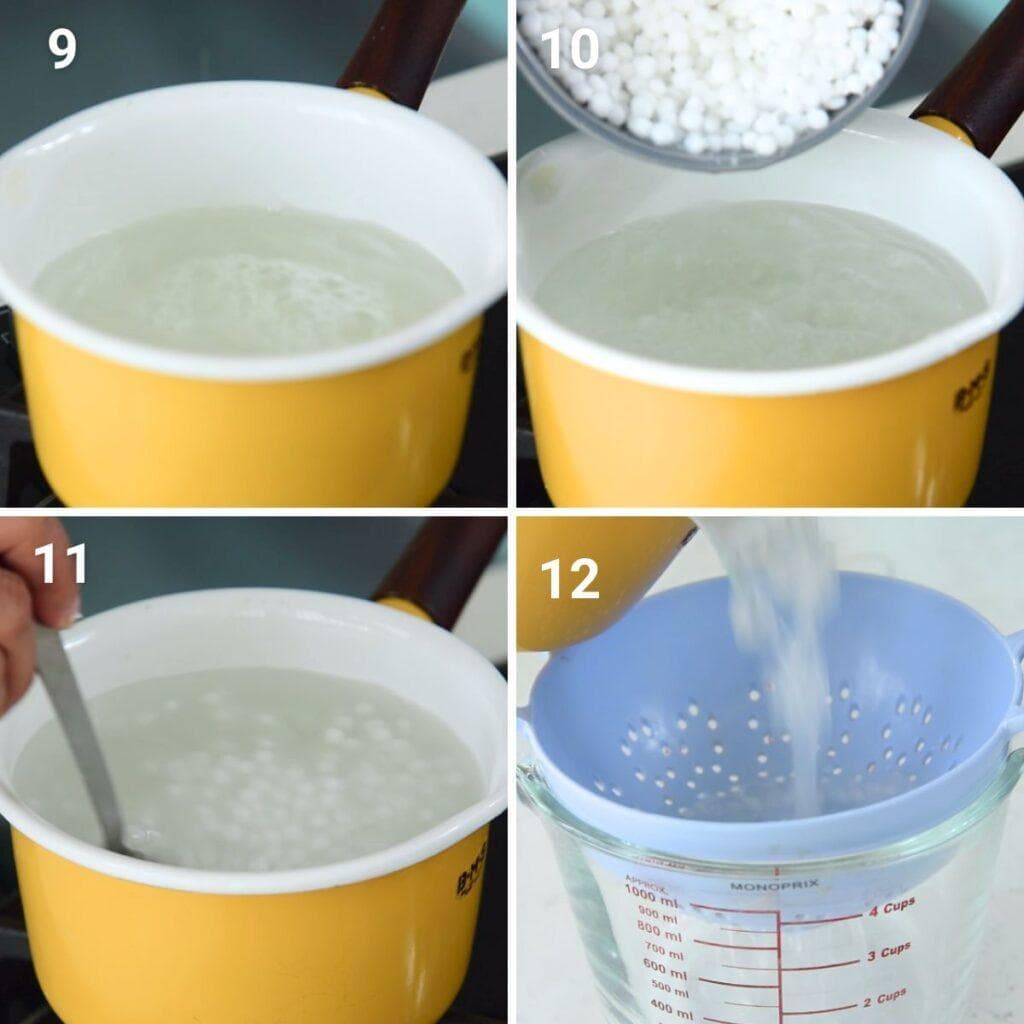
- To cook the sago, heat water in a saucepan and add the soaked tapioca into it.
- Let the sago cook for 20 minutes or until, they are almost transparent. Keep stirring to ensure they don’t stick to the bottom of pan.
- Once done, strain the sago to remove excess water & transfer to a separate bowl or container.
Preparing the Mangoes
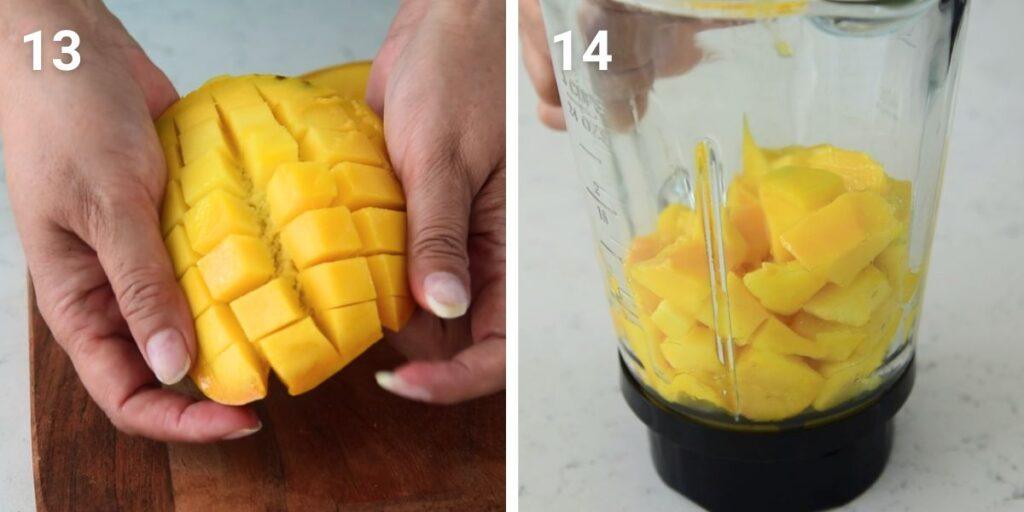
- First, slice off the sides of the mango along the pit. Take each half and make long, straight cuts into the flesh without cutting through the skin. Then, use a spoon to scoop out the flesh, releasing neat mango cubes.
- Take half of the mango cubes and blend into a puree, leaving the rest for toppings.
COMBINE and serve
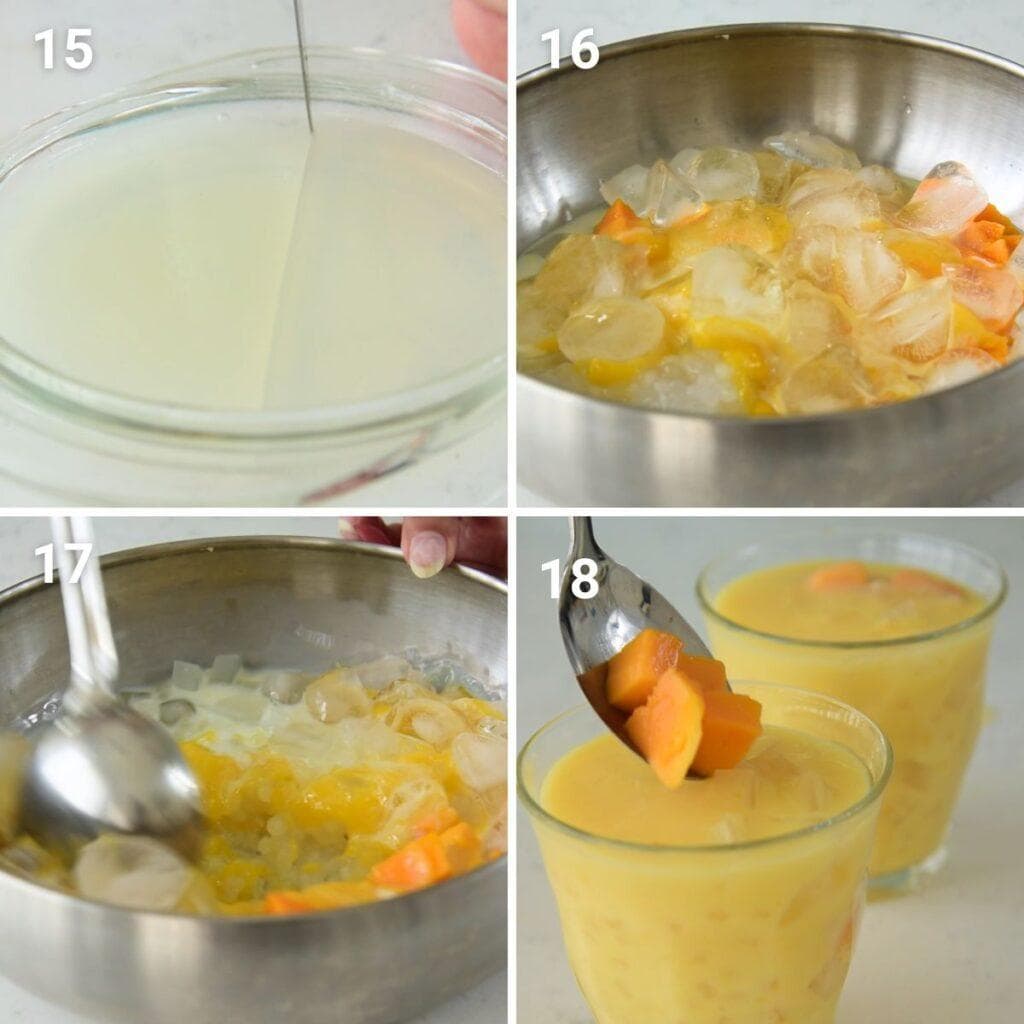
- Before combining everything, cut coconut jelly into cubes after its completely set.
- Then in a mixing bowl, toss the sago, coconut jelly, chopped mangoes, Mango puree, milk, condensed milk, ice cubes and combine.
- Top with more chopped mangoes while serving and enjoy!
Nutritionist’s Note
Nutritionist’s Note: Mango sago pudding is often dismissed as an indulgent dessert, but when made at home with portion control in mind, it is a reasonable choice. Fresh mango has a glycemic index of around 50, which is considered low to moderate, and its fiber content helps slow the absorption of natural sugars.
The coconut milk adds mostly medium-chain triglycerides (MCTs), which the body processes differently from long-chain saturated fats. The main thing to watch is the condensed milk, which adds refined sugar and calories. I use very less condensed milk in this mango sago recipe recipe (less than most versions), which works because ripe Ataulfo mangoes are naturally sweet enough to carry the dessert.
A reasonable serving of mango sago pudding is about 1/2 to 3/4 cup. If you are watching your sugar intake, use the condensed coconut milk swap and reduce the quantity further, relying on the mango’s natural sweetness. Adding a tablespoon of chia seeds to the base before chilling is a simple way to add fiber and a little protein.
Tips for the Best Mango Sago Pudding
Use the most water you have space for. Tapioca pearls release a lot of starch as they cook. A crowded pot leads to gummy, clumped pearls. At least 6 cups of water for 1/2 cup of pearls is the minimum.
Do not skip the cold rinse. Rinsing the cooked pearls in cold water is the single most important step for keeping them separate and bouncy. Skipping it leads to a sticky, gluey mass.
Let the mango base chill before combining with pearls if you have time. A colder base helps the pearls hold their texture. If serving immediately, the pudding will still be delicious but slightly thinner.
Taste and adjust before you chill. The sweetness of mango varies a lot by variety and ripeness. Taste the blended base and adjust the condensed milk before adding the pearls. Once it chills, sweetness perception drops slightly, so it should taste just slightly sweet at room temperature.
Sieve the mango base for extra smoothness. If you want an ultra-smooth, silky pudding, pass the blended mango mixture through a fine-mesh strainer before adding the pearls. This removes any fibrous bits.
Common Mistakes to Avoid
- Adding tapioca to cold or warm water (not boiling). This is the most common reason pearls turn mushy or dissolve. The water must be at a full rolling boil before the pearls go in.
- Not using enough water. The water thickens significantly during cooking. If you do not use enough, the pearls cook unevenly and stick together badly.
- Skipping the resting time after turning off heat. The 10 to 15 minute covered rest finishes the cooking gently. If you drain them straight after boiling, the center of the pearls will still be hard and chalky.
- Using unripe mango. Green-tipped or firm mangoes will give you a sour, astringent pudding with no natural sweetness. The mango should yield slightly when pressed and smell fragrant at the stem end.
- Over-sweetening. Most store-bought and restaurant versions are very sweet. At home, start with 3 tablespoons of condensed milk and taste first. Ataulfo mangoes especially are so sweet on their own that you may need even less.
Meal Prep and Storage – Mango Sago Recipe
In the refrigerator: Store in a sealed container for up to 3 days. The pudding will thicken considerably as it sits. Stir in a splash of coconut milk or oat milk before serving to loosen it back to your preferred consistency.
Storing components separately for longer life: If you want it to last closer to 4 days, store the drained tapioca pearls in a bowl covered with a little cold water (separate container) and keep the mango base refrigerated separately. Combine just before serving. This keeps the pearls bouncier.
Freezing: Not recommended. The tapioca pearls become grainy and tough after freezing and thawing.
Make-ahead for a party: The mango coconut base can be made up to 2 days ahead. Cook the tapioca pearls the day before and store in cold water. Assemble in glasses a few hours before the party and refrigerate uncovered, then cover with plastic wrap. Add fresh mango chunks just before serving.
FAQ (People Also Ask)
Q: Is sago the same as tapioca?
A: They cook the same way but come from different plants (sago palm vs cassava). Either works in this pudding. Wikipedia
Q: Can I use canned mango pulp?
A: Yes, swap 1 cup canned pulp for fresh puree, but reduce added sweetener.
Q: How do I keep sago from sticking?
A: Stir during the first 5 minutes of boiling and rinse immediately in cold water.
Q: Is mango sago recipe gluten-free?
A: 100 % – tapioca pearls and agar are naturally gluten-free.
Q: Can I serve it warm?
A: Traditionally it’s chilled, but you can serve freshly cooked warm sago with cold mango puree for a fun hot-cold contrast
Can I use large boba pearls instead of small tapioca pearls?
This recipe is designed for small tapioca pearls (about 2mm). Large boba pearls require a much longer cooking time and a different method. The small pearls give this pudding its classic, silky texture with just enough chew.
Can I make mango sago pudding ahead of time?
Yes, this is one of the best things about this dessert. The mango coconut base can be made up to 2 days ahead. The tapioca pearls can be cooked a day ahead and kept in cold water. Assemble a few hours before serving and refrigerate. Add fresh mango toppings just before serving.
More Such Recipes
- Mango Lassi Recipe
- Mango Matcha Chia Pudding
- Mango Salsa
- Mango Salad
- Mango Burfee
- 3-ingredients Mango Icecream
- Mango Smoothie
If You like this recipe and made it Please rate the recipe. It helps us to reach more people. For the Latest updates Subscribe to Rekha’s Whatsapp. You can follow me on Instagram, Facebook, Youtube, Pinterest for more food inspirations.
Mango Sago Recipe
Ingredients
- 2 ripe mangoes (for puree and toppings)
- 1.25 cup milk or any plant-based milk
- 3 tablespoons sweetened condensed milk
Prepping the Tapioca (Sago)
- ½ cup medium-sized tapioca pearls soaked
- 2 cups water for cooking sago
Preparing Coconut Jelly
- 2 tablespoons agar agar powder
- 3 tablespoons water for mixing agar agar
- 150 ml coconut water
- 2 teaspoons monk fruit sweetener optional
Instructions
PREPPING THE Tapioca (Sago)
- Soak the tapioca pearls in water for at least 4 hours to soften them.½ cup medium-sized tapioca pearls
Preparing coconut jelly
- First, mix agar agar powder with a little water and mix well until it turns to a paste.2 tablespoons agar agar powder
- Now, take coconut water in a saucepan, if you are using fresh coconut water like me, then you can strain it through a sieve to remove any coconut chunks.150 ml coconut water
- During this time, add a sweetener to the coconut water for a jelly like flavor, or skip if you want. Then add the agar agar mixture into it & stir until it dissolves completely.2 teaspoons monk fruit sweetener
- Keep stirring the coconut water as it simmers and starts to boil.
- After brief boiling, take it off the heat & transfer it into a shallow bowl and let it set in the fridge for an hour.
Cooking The Sago
- To cook the sago, heat water in a saucepan and add the soaked tapioca into it.2 cups water
- Let the sago cook for 20 minutes or until, they are almost transparent. Keep stirring to ensure they don't stick to the bottom of pan.½ cup medium-sized tapioca pearls
- Once done, strain the sago to remove excess water & transfer to a separate bowl or container.
Preparing the Mangoes
- First, slice off the sides of the mango along the pit. Take each half and make long, straight cuts into the flesh without cutting through the skin. Then, use a spoon to scoop out the flesh, releasing neat mango cubes.2 ripe mangoes
- Take half of the mango cubes and blend into a puree, leaving the rest for toppings.2 ripe mangoes
COMBINE and serve
- Before combining everything, cut coconut jelly into cubes.
- Then in a mixing bowl, toss the sago, coconut jelly, chopped mangoes, Mango puree, milk, condensed milk, ice cubes and combine.
- Top with more chopped mangoes while serving and enjoy!